★ "wish"
(다음과 네이버 사전 참고)
☞ 문장 분석 과정에서 어휘력이 길러짐.
◆
wish somebody luck
(행운을 빌다)
☞
비슷한 표현:
Break a leg
공연이나 중요한 일을 앞둔 사람에게
행운을 빌어줄 때 사용
Cross your fingers
좋은 결과를 바라며 손가락을 교차하는 행위
Knock on wood
불운을 피하기 위해 나무를 두드리는 행위
Hit the jackpot
큰 행운을 얻다
Fortune favors the bold
용감한 사람에게 행운이 따른다
Best of luck
행운을 빌어!
Fingers crossed
행운을 빌어!
Wishing you all the best
최선을 다하길 바라!
May luck be on your side
행운이 함께하길!
Knock 'em dead
멋지게 해내길!
☞
(위와 중복된 표현 있음)
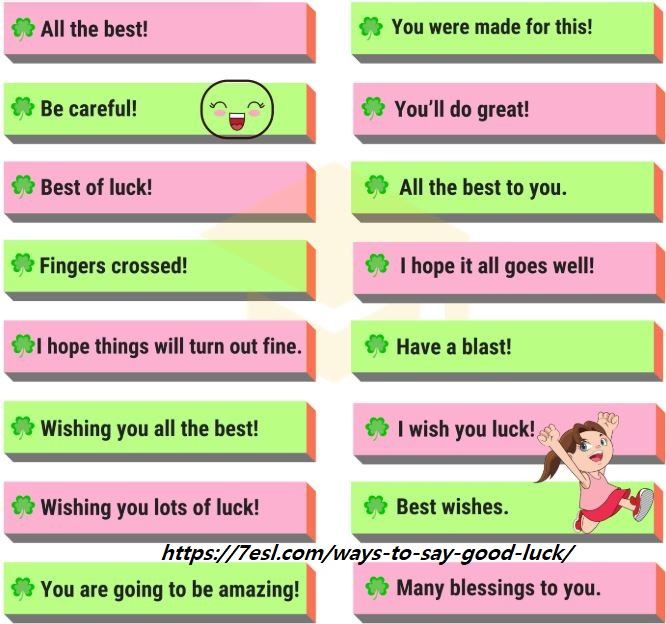
★ [AI 설명]
"wish somebody luck"과
"wish me luck"의 차이점:
1. wish somebody luck
다른 사람에게 행운을 빌어줄 때 사용.
예:
I wished my friend luck
before his job interview.
(나는 친구가 면접을 보기 전에
행운을 빌어 주었다.)
Wish her luck for the competition!
(그녀가 대회에서 잘하길 빌어줘!)
2. wish me luck
내가 행운이 필요할 때,
다른 사람에게 나에게 행운을 빌어달라고
요청할 때 사용.
예:
I'm taking an important test today.
Wish me luck!
(오늘 중요한 시험을 봐. 행운을 빌어줘!)
I'm about to go on stage.
Wish me luck!
(무대에 올라가기 직전이야. 행운을 빌어줘!)
3. 즉,
"wish somebody luck"은
남을 위해 사용하고,
"wish me luck"은
자신을 위해 사용한다는 차이가 있음.
☞ 어휘력 06.05 [wish - (2)]
Let's wish him luck
and watching his game closely!
(오류 수정:
"Let's wish him luck"은
동사 "wish"가 사용된 절인데,
"watching"은 현재분사 형태라서
병렬구조를 맞추지 못하고 있음.
때문에
동사원형 "watch"가 필요.
수정된 문장
→
Let's wish him luck and watch his game closely!)
("Let's"는 "Let us"의 줄임말로,
뒤에는 동사 원형,
"let + 목적어 + 동사원형")
(위 문장과 비슷한 다른 표현:
Let's cheer him on and follow his game closely!
Let's support him and keep an eye on his game!)
Well, let's wish them luck
with their concert and debut in Japan.
("Well"은 부사로서
문장의 분위기를 부드럽게 조정함.
"with their concert and debut in Japan"은
"with + 명사" 구조로,
"그들의 콘서트와 일본 데뷔에 관하여"라는 뜻.)
(더 자연스러운 표현:
Well, let's wish them luck
on their concert and debut in Japan.
→
"on"을 사용하면
"콘서트 및 데뷔라는 특정 이벤트"에 대한
행운을 빌어주는 느낌을 강조할 수 있음.
Well, let's wish them all the best
for their concert and debut in Japan.
→
"wish them all the best"는
보다 포괄적인 행운을 빌어주는 느낌을 줌.)
Countless fans came to the airport
to wish them luck.
("came to the airport"에서
"came"은 완전 자동사로
장소 부사구 "to the airport"와
함께 쓰임.)
("to wish them luck"에서
"to wish"는
부정사의 부사적 용법으로 사용되어
목적을 나타냄.
즉,
"came"이라는 동사를 수식하며
목적을 나타냄
→ "왜 왔는가?"
→ "행운을 빌어주기 위해"라는
"동작의 목적"을 설명하는 역할.)
(위 문장과 다른 표현:
Thousands of fans
gathered at the airport
to wish them good luck.
"수천 명의 팬들이 공항에 모여
그들에게 행운을 빌어주었다."
An overwhelming number of fans
filled the airport
to wish them luck on their journey.
"압도적인 수의 팬들이 그들의 여정을 위해
행운을 빌어주러 공항을 가득 채웠다.")
Let's all wish him good luck!
("good luck"은 명사구,
"좋은 행운"을 의미.)
(여기서 "all"은
대명사 "us"를 후치 수식하는
형용사 역할.
즉,
"우리 모두"라는 의미를 강조하는 역할.)
(대명사 수식으로 쓰인 "all"의 예:
God bless us all.
"신이 우리 모두를 축복하길."
→
"us"를 후치 수식하는 형용사.
We all agree with that.
"우리 모두가 그것에 동의한다."
→ "we"를 수식하는 형용사.
They all enjoyed the party.
"그들 모두가 파티를 즐겼다."
→ "they"를 수식하는 형용사.
이처럼
"all"은 대명사 뒤에 올 때
형용사적 용법으로 쓰이고,
의미를 강조해 줌.)
(위 문장과 유사 표현:
Let's all wish him luck!
→
가장 자연스럽고 일반적인 표현.
Let's wish him the best of luck!
→
더 강한 행운을 빌어주는 느낌.
Let's wish him great success!
→
행운뿐만 아니라 성공까지 기원하는 의미.)
By wishing someone bad luck,
it is supposed that the opposite will occur.
("By + 동명사" 구조,
"By wishing"에서
"By + 동명사"는
수단/방법을 나타내는
부사구 역할을 하는 분사구문,
"누군가에게 불운을 빌면서"라는 의미.)
("it is supposed that"은
"it"을 가주어로 사용하는
수동태 구조,
"~라고 여겨진다",
"It ~ that..." 강조구문이 아니라
가주어 "it"와 진주어 "that절" 구조.)
(조금 더 자연스러운 표현:
It is believed
that
wishing someone bad luck
will bring them good luck.
People say
that
wishing someone bad luck
will actually bring good luck to them.
There is a superstition
that
bad luck wishes
result in good luck instead.)
Since the early 1920s,
there has been a theatrical superstition
that
wishing someone good luck
would rather bring in bad luck.
("Since the early 1920s"는
"Since + 시점"으로 시작하는
시간 부사구,
"1920년대 초반부터"라는 의미.
"there has been"은 현재완료로,
"어떤 것이 존재해왔다"는 의미.
"a theatrical superstition"은
"theatrical/연극적인"
+ "superstition/미신"으로,
"연극계에서의 미신"이라는 명사구.
"that wishing someone good luck
would rather bring in bad luck"은
"that"으로 시작하는 명사절,
"누군가에게 행운을 빌어주면
오히려 불운을 가져올 것이다"는 내용.
"that절"은 동격절인 명사절로
"a theatrical superstition"을 설명.
- 아래 참고)
("wishing someone good luck"에서
"wishing"은 동명사로
"that절"의 주어,
"행운을 빌어주는 것"을 의미.
"would rather"는
"오히려~하는 것이 더 가능성이 크다"의 의미.
"bring in"은
"가져오다, 초래하다"라는
뜻의 구동사로 타동사,
목적어는 "bad luck")
("would rather" 대신
"ironically"나 "actually"를 사용한 표현:
Since the early 1920s,
a theatrical superstition has existed
that
wishing someone good luck
actually brings bad luck.
A superstition has persisted
in the theater world
since the early 1920s
that
wishing someone good luck
ironically results in bad luck.)
☞ [참고]
위 문장에서,
"that절"은
동격절이 아니라
특정 명사를 설명하는
"제한적 명사절"이라고
설명하는 경우도 있지만,
그냥
동격절로 보아도 무방할 것임.
왜냐하면,
"제한적 명사절(restrictive noun clause)"이라는
용어는
일반적인 문법 용어도 아닐뿐더러,
위 문장에서
정확히는
"명사 = that절의 내용" 관계가 성립하는
동격절은 아니지만,
앞 명사를 설명한다는 면에서
동격절로 보아도 무방할 것임.
무엇보다도
두 개념을 구별할 실익이 없음.
'영어 어휘력 기르기' 카테고리의 다른 글
| 어휘력 06.18 [wish - (12)] (3) | 2025.06.18 |
|---|---|
| 어휘력 06.16 [wish - (11)] (0) | 2025.06.16 |
| 어휘력 06.13 [wish - (9)] (2) | 2025.06.13 |
| 어휘력 06.11 [wish - (8)] (2) | 2025.06.11 |
| 어휘력 06.10 [wish - (7)] (1) | 2025.06.10 |