★
테스트를 통해 어휘력 다지기!
☞ 어휘력 [wish - (28)] - Ⅰ → [단어/숙어 19]
★
"arrogance"의 동의어 (2).
<Instruction>
Choose the best answer
that correctly identifies the subtle differences
between the two related terms in each question.
1.
How do you distinguish Snobbishness from Arrogance?
A) Snobbishness is specifically based on social status or wealth,
whereas arrogance is a general sense of superiority.
B) Snobbishness is about physical appearance,
while arrogance is about intellectual ability.
C) Snobbishness is a form of politeness,
whereas arrogance is always aggressive.
D) There is no difference;
they are exact synonyms used in the same contexts.
Correct Answer: A
Explanation:
While arrogance is a broad term for overbearing pride,
snobbishness specifically involves looking down on others
based on their perceived lower social or economic standing.
2.
What is the key difference between Hubris and Conceit?
A) Hubris is a lack of confidence, while conceit is excessive pride.
B) Hubris is only used in sports,
while conceit is used in academic settings.
C) Conceit involves physical vanity,
while hubris involves excessive talking.
D) Hubris often involves a defiant pride that leads to a downfall,
while conceit is simply having an overly high opinion of oneself.
Correct Answer: D
Explanation:
Hubris is a "dangerous" level of pride that often invites disaster
(often against fate or authority),
whereas conceit is the internal state
of being too proud of one’s own qualities.
3.
How can one distinguish Condescension from Haughtiness?
A) Condescension involves acting superior
by "descending" to help others pityingly,
while haughtiness is a cold, aloof distance.
B) Condescension is a form of extreme respect,
while haughtiness is a form of extreme anger.
C) Condescension is quiet,
while haughtiness is always loud and boisterous.
D) There is no distinction; both words describe physical height.
Correct Answer: A
Explanation:
Condescension has a patronizing tone
—acting as if you are doing someone a favor by dealing with them—whereas haughtiness is characterized by a "high and mighty" coldness.
4.
What is the difference between Vanity and Smugness?
A) Vanity is pride in one's appearance or achievements,
while smugness is a satisfied, "I told you so" type of self-satisfaction.
B) Vanity is always a positive trait, while smugness is always negative.
C) Vanity is about helping others, while smugness is about ignoring others.
D) Vanity is a physical object, while smugness is a verbal action.
Correct Answer: D
Explanation:
Vanity is focused on how one is perceived (looks/fame),
while smugness is an internal feeling of being "correct" or "better,"
often shown through a complacent smile.
5.
How do you distinguish Imperiousness from Lordliness?
A) Imperiousness is about fashion, while lordliness is about food.
B) Imperiousness focuses on commanding and dictating to others,
while lordliness describes an overall "royal" or domineering manner.
C) Imperiousness is a quiet shyness,
while lordliness is a loud confidence.
D) Both terms describe a person
who is extremely humble and submissive.
Correct Answer: B
Explanation:
Imperiousness emphasizes the urgent,
commanding nature of an arrogant person,
while lordliness describes the general behavior of someone
acting like they are of higher rank than everyone else.
6.
What distinguishes Superciliousness from Hauteur?
A) Superciliousness is often shown through facial expressions
(like raised eyebrows),
while hauteur is a broader air of chilly superiority.
B) Superciliousness is about being very loud,
while hauteur is about being very quiet.
C) Superciliousness is a sign of friendship,
while hauteur is a sign of hatred.
D) There is no difference; they both mean "extremely happy."
Correct Answer: A
Explanation:
Superciliousness comes from the Latin for "eyebrow,"
implying a look of disdain.
Hauteur describes the overall "height" or lofty manner one maintains.
7.
How do you distinguish Cockiness from Swagger?
A) Cockiness is a bold, annoying overconfidence (often in youth),
while swagger is the outward, physical manifestation
or "walk" of that confidence.
B) Cockiness is a type of fear, while swagger is a type of bravery.
C) Cockiness is only about intelligence,
while swagger is only about wealth.
D) Cockiness is a formal term,
while swagger is only used in old literature.
Correct Answer: A
Explanation:
Cockiness is the internal trait of being overly confident and rude;
swagger is the boastful way one carries themselves or behaves.
8.
What is the difference between Pretension and Pomposity?
A) Pretension is about physical strength,
while pomposity is about physical speed.
B) Pretension is claiming a status one doesn't have,
while pomposity is acting in an exaggeratedly solemn or "grand" way.
C) Pretension is always honest, while pomposity is always a lie.
D) There is no difference; they both refer to being very shy.
Correct Answer: B
Explanation:
Pretension (from "pretend") involves faking importance.
Pomposity is about the "pomp" or the overly grand,
self-important way a person speaks or acts.
9.
How can you distinguish Insolence from Disdain?
A) Insolence is a rude, disrespectful action toward authority,
while disdain is a feeling that someone is unworthy of respect.
B) Insolence is a feeling of love, while disdain is a feeling of joy.
C) Insolence is a quiet thought, while disdain is a loud scream.
D) Both words mean the same as "politeness."
Correct Answer: A
Explanation:
Insolence is an active behavior (being "cheeky" or rude),
whereas disdain is an internal attitude
of looking down on something as worthless.
10.
What is the difference between Self-importance and Presumption?
A) Self-importance is about being small,
while presumption is about being large.
B) Self-importance is an exaggerated view of one’s own value,
while presumption is overstepping boundaries or taking liberties.
C) Self-importance is a legal term,
while presumption is a medical term.
D) They are synonyms for "humility."
Correct Answer: B
Explanation:
Self-importance is the belief that "I am very important."
Presumption is the action of "presuming"
you have rights or authority
that you actually don't.
(presuming은 동명사로,
뒤에 목적어를 필요로 하는 타동사의 성질을 가지고 있기 때문에
목적어로 that절 동반, 접속사 that이 생략이 된 것.)
11. How do you distinguish Scorn from Disdain?
A) Scorn is a feeling of extreme hunger, while disdain is a feeling of thirst.
B) Scorn is only used for objects, while disdain is only used for people.
C) Scorn is a more intense, often vocalized feeling of contempt,
while disdain is a more detached, "looking down" feeling.
D) Scorn means to praise, while disdain means to ignore.
Correct Answer: C
Explanation:
While very similar,
scorn often carries a stronger sense of rejection and mockery,
whereas disdain can be a silent sense of superiority.
12. What distinguishes Pomposity from Arrogance?
A) Pomposity is a form of sadness, while arrogance is a form of anger.
B) Pomposity is only found in children,
while arrogance is only found in adults.
C) Arrogance is a positive trait, while pomposity is negative.
D) Pomposity is about the "showy" and "inflated" manner of behavior,
while arrogance is the core belief in one’s superiority.
Correct Answer: D
Explanation:
You can be arrogant without being pompous (by being quietly superior),
but pomposity requires an exaggerated, grand display of self-importance.
13.
How do you distinguish Hauteur from Haughtiness?
A) Hauteur is about smell, while haughtiness is about taste.
B) Hauteur is a type of hat, while haughtiness is a type of shoe.
C) Hauteur is a French-derived term
often describing a specific "air" of loftiness,
while haughtiness is the more general English noun.
D) Hauteur is a verb, while haughtiness is an adjective.
Correct Answer: C
Explanation:
They are very close synonyms,
but "hauteur" often suggests
a more cultivated or refined air of chilly superiority,
whereas "haughtiness" is the standard term for that attitude.
14.
What is the difference between Cockiness and Conceit?
A) Cockiness is a silent thought, while conceit is a physical walk.
B) Cockiness is an outward, often annoying "boldness,"
while conceit is the internal high opinion of oneself.
C) Cockiness is about being old, while conceit is about being young.
D) There is no difference; they are opposites.
Correct Answer: B
Explanation:
Conceit is the "state" of having an inflated ego.
Cockiness is the "expression" of that ego,
often in a brash or rude way.
15.
How do you distinguish Presumption from Insolence?
A) Presumption is always polite, while insolence is always helpful.
B) Presumption is a type of food, while insolence is a type of drink.
C) Presumption is taking something for granted or overstepping,
while insolence is being intentionally rude and insulting to authority.
D) Both describe a person who is very afraid.
Correct Answer: C
Explanation:
A child who sits in the teacher's chair is being presumptive
(assuming a right they don't have);
a child who talks back to the teacher is being insolent.
16.
What is the difference between Snobbishness and Condescension?
A) Snobbishness is about animals, while condescension is about plants.
B) Snobbishness is a compliment, while condescension is a physical height.
C) There is no difference; they both mean "friendliness."
D) Snobbishness is about who you exclude,
while condescension is
about how you treat those you include but feel superior to.
Correct Answer: D
Explanation:
Snobs avoid those they think are "below" them.
Condescending people interact with them but do so in a patronizing,
"talking down" manner.
17.
How do you distinguish Vanity from Pretension?
A) Vanity is being proud of what you actually have,
while pretension is trying to appear to have what you don't.
B) Vanity is a type of mirror, while pretension is a type of window.
C) Vanity is about the past, while pretension is about the future.
D) Both mean "honesty."
Correct Answer: A
Explanation:
A beautiful person can be vain (too much pride in actual beauty).
A person who pretends to be a billionaire
is showing pretension (claiming something false).
18.
What is the difference between Swagger and Hubris?
A) Swagger is a sign of weakness, while hubris is a sign of strength.
B) Swagger is a visible style of behavior,
while hubris is a profound,
often tragic spiritual/mental state of overconfidence.
C) Swagger is only found in books, while hubris is only found in movies.
D) They are both synonyms for "shyness."
Correct Answer: B
Explanation:
Swagger is about "how you walk/act" to show off.
Hubris is a "fatal flaw" of excessive pride
that usually ends in a total collapse or punishment.
19.
How do you distinguish Smugness from Lordliness?
A) Smugness is about being poor, while lordliness is about being rich.
B) Smugness is a form of exercise, while lordliness is a form of sleep.
C) Smugness is a self-satisfied internal "glow,"
while lordliness is a domineering, "I am the boss" outward attitude.
D) Both terms describe someone who is very humble.
Correct Answer: C
Explanation:
Smugness is "I am so pleased with how right I am."
Lordliness is "Everyone must obey me because I am superior."
20.
What is the final difference between Superciliousness and Haughtiness?
A) Superciliousness is a type of science, while haughtiness is a type of art.
B) Superciliousness is a verb, while haughtiness is a noun.
C) Both are synonyms for "extreme kindness."
D) Superciliousness emphasizes the "disdainful look,"
while haughtiness emphasizes the "superior attitude."
Correct Answer: D
Explanation:
While they overlap significantly,
superciliousness often refers to the specific facial or behavioral cues
(raised eyebrows/scornful look)
that signal haughtiness.
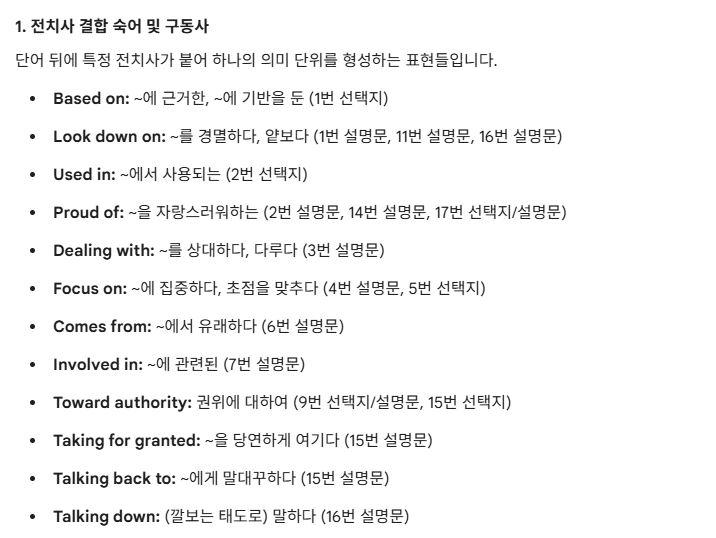
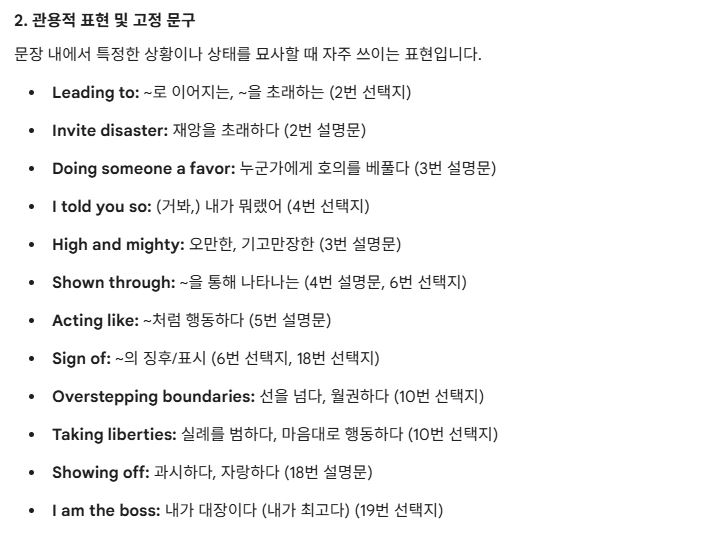
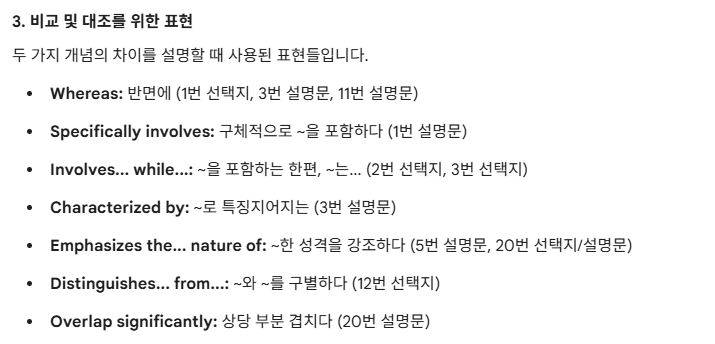
☞ [숙어 / 관용구]

'영어 어휘력 기르기 > 동의어 퀴즈' 카테고리의 다른 글
| 어휘력 [wish - (28)] - Ⅰ → [단어/숙어 20] → [테스트 3] (0) | 2026.05.02 |
|---|---|
| 어휘력 [wish - (28)] - Ⅰ → [단어/숙어 20] → [테스트 2] (0) | 2026.05.02 |
| 어휘력 [wish - (28)] - Ⅰ → [단어/숙어 20] → [테스트 1] (0) | 2026.05.02 |
| 어휘력 [wish - (28)] - Ⅰ → [단어/숙어 19] → [테스트 3] (0) | 2026.04.29 |
| 어휘력 [wish - (28)] - Ⅰ → [단어/숙어 19] → [테스트 1] (0) | 2026.04.29 |