★
테스트를 통해 어휘력 다지기!
☞ 어휘력 [wish - (28)] - Ⅰ → [단어/숙어 15]
★
"erase"의 동의어 (1).
1.
A technician is helping
a user manage space on a smartphone.
The user wants to get rid of a specific photo file
to free up storage.
Which action should the technician perform?
A) Delete
B) Eradicate
C) Efface
D) Cross out
Answer: A
Explanation:
"Delete" is the standard term
used in digital environments
for removing files, data,
or text from a computer or electronic device.
2.
A gardener is frustrated
because weeds keep growing back
in the backyard.
To solve the problem permanently,
the gardener decides to pull them out
by the roots so they can never return.
This action is best described as:
A) Wiping
B) Scratching out
C) Eradicating
D) Canceling
Answer: C
Explanation:
"Eradicate" means
to completely destroy or put an end to something,
often used in the context of pests, diseases,
or social problems,
implying pulling something up by the roots.
3.
During a high-stakes poker game,
a player accidentally knocks over
a glass of water onto the felt table.
He quickly grabs a dry cloth
and moves it across the surface
to soak up the liquid.
What is he doing?
A) Expunging
B) Wiping
C) Deleting
D) Obliterating
Answer: B
Explanation:
"Wipe" refers to
the physical act of cleaning or drying a surface
by rubbing it with a cloth or hand.
4.
A historian is examining an ancient monument
where the original inscriptions
have become faint and nearly invisible
due to centuries of wind and rain erosion.
The passage of time has performed
which action on the text?
(변칙적 의문문 →
올바른 정규 의문문:
“Which action has
the passage of time performed on the text?”)
A) Scratched out
B) Canceled
C) Removed
D) Effaced
Answer: D
Explanation:
"Efface" is a formal or literary term
used when marks or memories become indistinct
or are rubbed out,
often by natural processes or time.
5.
A city council is debating
whether to take down a controversial statue
in the town square.
They want to physically take it away
from its current location.
Which general term best describes this act?
A) Remove
B) Expunge
C) Delete
D) Erase
Answer: A
Explanation:
"Remove" is
the most general and versatile term
for taking something away from a specific place,
whether the object is physical or abstract.
6.
A student is taking a math test with a pencil.
After realizing they made a calculation error,
they use the rubber tip of the pencil
to rub the graphite off the paper
so they can write the correct numbers.
What did the student do?
A) Obliterate
B) Erase
C) Cross out
D) Expunge
Answer: B
Explanation:
"Erase" specifically refers to
rubbing out something written or drawn,
typically using an eraser or a physical tool.
7.
In a sci-fi movie,
a powerful alien weapon strikes a planet,
causing a city to vanish instantly.
Not a single building or trace of life remains;
it is as if the city never existed.
This level of total destruction is called:
A) Removing
B) Wiping
C) Obliterating
D) Scratching out
Answer: C
Explanation:
"Obliterate" carries
a very strong nuance of total destruction,
leaving no traces or evidence behind.
8.
A lawyer is filing
a petition
to have a client's minor criminal record
from twenty years ago
permanently struck from the official court archives.
The goal is to legally treat the record
as if it never happened.
This legal process is called:
A) Effacing
B) Erasing
C) Deleting
D) Expunging
Answer: D
Explanation:
"Expunge" is
a formal legal term specifically
used for the official removal
or destruction of records
or names from a list or document.
9.
While handwriting a letter,
a person writes a word incorrectly.
Instead of using a correction fluid,
they take their pen
and draw a single horizontal line
through the word
to show it is no longer valid,
then continue writing.
This action is:
A) Crossing out
B) Eradicating
C) Wiping
D) Effacing
Answer: A
Explanation:
"Cross out" means to draw a line
through written text
to indicate it is wrong or should be ignored.
10.
A detective finds
a secret message written on a wooden table.
To prevent anyone else from reading it,
the detective takes a sharp knife
and aggressively rubs the blade against the wood
until the letters are physically gouged out and unreadable.
This is called:
A) Deleting
B) Scratching out
C) Canceling
D) Expunging
Answer: B
Explanation:
"Scratch out" describes
the physical act of removing written marks
by scraping or gouging the surface
they are written on.
11.
A person has a subscription to a magazine
but realizes they no longer read it.
They call the company to stop the service
and void their membership
so they are no longer billed.
In the context of records or agreements, they are:
A) Wiping
B) Obliterating
C) Canceling
D) Erasing
Answer: C
Explanation:
"Cancel" means to void or stop an arrangement,
but in the context of documents and records,
it can also mean to mark something
as no longer valid
(often by drawing a line through it).
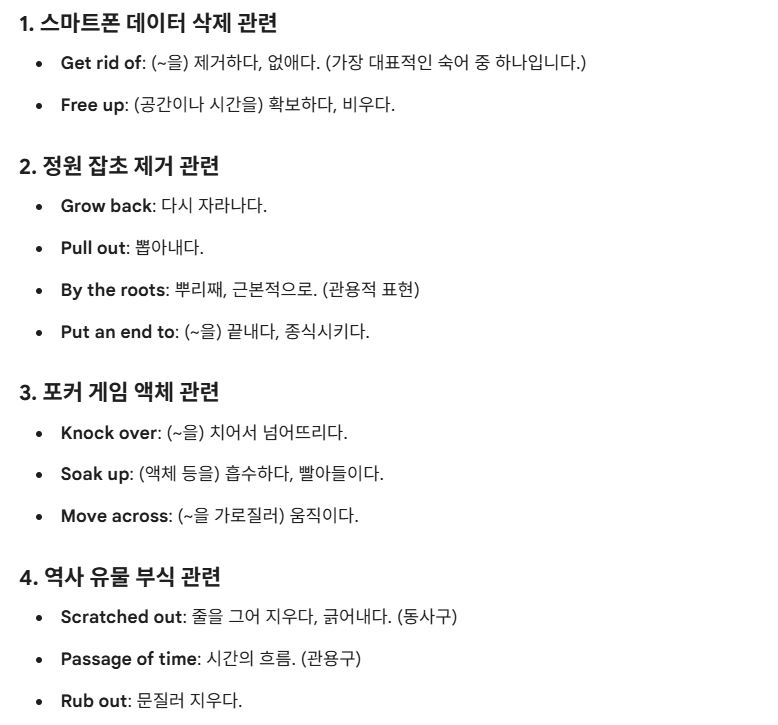
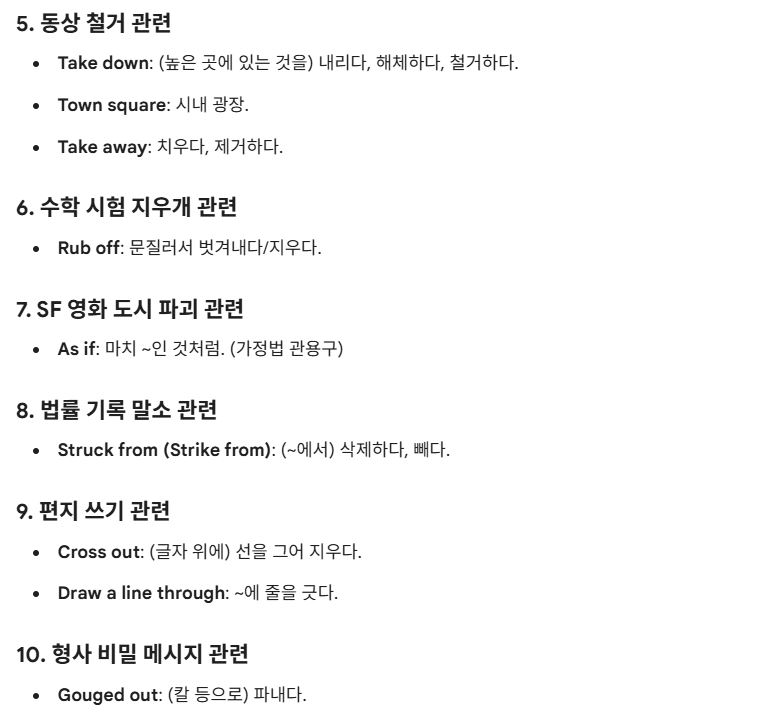
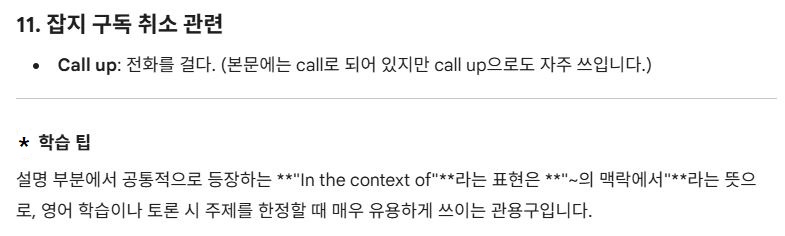
☞ [숙어 / 관용구]
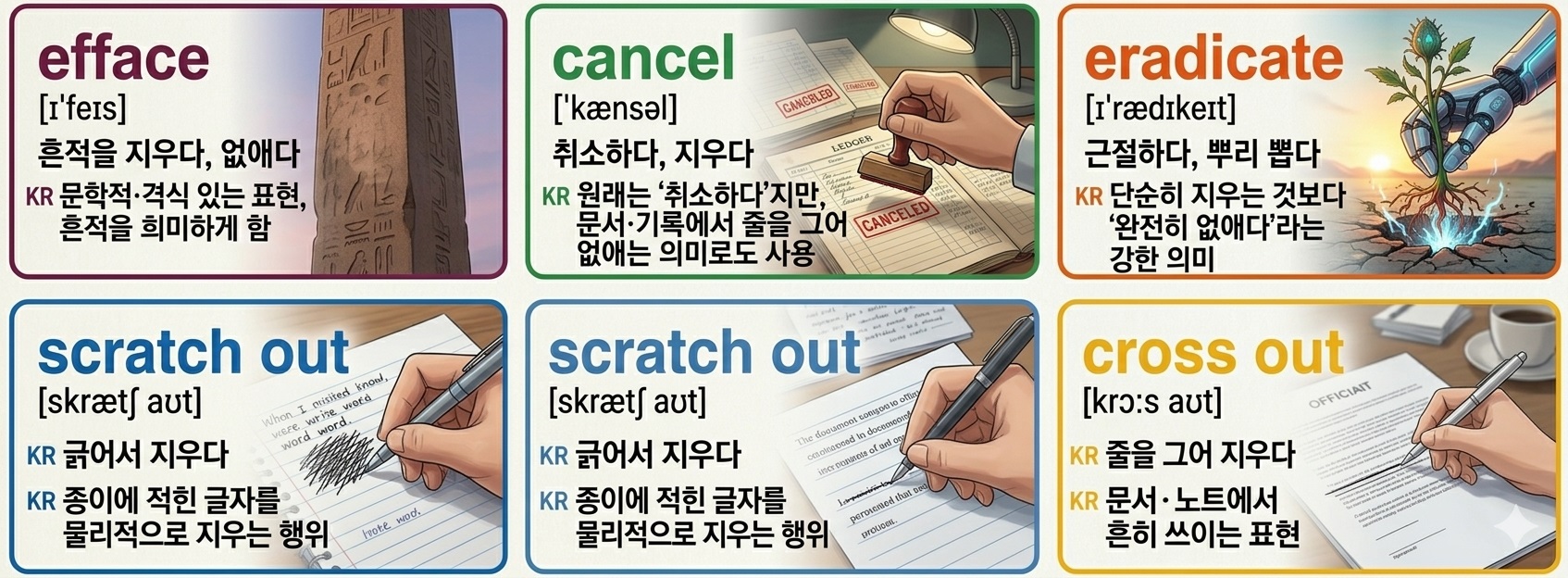
☞ [학습용 단어장] (중복 단어 있음.)

'영어 어휘력 기르기' 카테고리의 다른 글
| 어휘력 [wish - (28)] - Ⅰ → [단어/숙어 15] → [테스트 3] (0) | 2026.04.19 |
|---|---|
| 어휘력 [wish - (28)] - Ⅰ → [단어/숙어 15] → [테스트 2] (1) | 2026.04.19 |
| 어휘력 [wish - (28)] - Ⅰ → [단어/숙어 14] → [테스트 3] (1) | 2026.04.17 |
| 어휘력 [wish - (28)] - Ⅰ → [단어/숙어 14] → [테스트 2] (0) | 2026.04.17 |
| 어휘력 [wish - (28)] - Ⅰ → [단어/숙어 14] → [테스트 1] (1) | 2026.04.17 |