★
테스트를 통해 어휘력 다지기!
☞ 어휘력 [wish - (28)] - Ⅰ → [단어/숙어 3]
★
"curse"의 동의어 (3).
1.
After failing the exam for the third time,
he felt as though a ______ had been placed on him,
causing nothing but bad luck.
A) profanity
B) jinx
C) vulgarism
D) blasphemy
Answer: B
Explanation:
A jinx refers to something or someone
that brings bad luck or a series of unfortunate events.
2.
The priest warned the congregation
that using the Lord's name in such a disrespectful way
was an act of ______.
A) cuss
B) expletive
C) blasphemy
D) spell
Answer: C
Explanation:
Blasphemy specifically refers to speaking sacrilegiously
or showing contempt
toward God or sacred things.
3.
In many ancient myths,
a powerful witch would utter a deadly ______
to bring ruin upon her enemies.
A) vulgarism
B) obscenity
C) swearword
D) malediction
Answer: D
Explanation:
A malediction is a formal utterance or curse intended to bring
about evil or destruction.
4.
The movie was rated R primarily
because the characters used constant ______ and offensive language.
A) profanity
B) hex
C) anathema
D) damnation
Answer: A
Explanation:
Profanity is a broad term for socially offensive, irreverent,
or "foul" language.
5.
In some strict religious traditions,
being declared an ______ means
you are formally excommunicated and cursed by the church.
A) imprecation
B) anathema
C) expletive
D) obscenity
Answer: B
Explanation:
Anathema refers to a formal curse or a person/thing
that is detested and rejected by a religious authority.
6.
When the player dropped the ball at the last second,
he let out a loud ______ that could be heard by everyone in the stands.
A) swearword
B) damnation
C) hex
D) spell
Answer: A
Explanation:
A swearword is a socially taboo word used
to express sudden anger, frustration, or annoyance.
7.
The wizard began to chant a mysterious ______
to summon a protective barrier
around the castle.
A) cuss
B) spell
C) vulgarism
D) malediction
Answer: B
Explanation:
A spell is a sequence of words used
to invoke supernatural power or magical effects.
8.
Her speech was criticized for being full of ______,
making her sound unrefined and lacking in social grace.
A) imprecations
B) jinxes
C) hexes
D) vulgarisms
Answer: D
Explanation:
A vulgarism is a word or expression considered unrefined, coarse,
or characteristic of a lower social standing.
9.
The angry hermit screamed a bitter ______ at the trespassers,
calling on spirits to haunt them forever.
A) obscenity
B) expletive
C) imprecation
D) jinx
Answer: C
Explanation:
An imprecation is a spoken curse,
especially one that calls upon a deity or supernatural force
to strike someone.
10.
In the heat of the argument,
he couldn't help but ______ under his breath,
though he tried to remain polite.
A) curse
B) anathema
C) damnation
D) malediction
Answer: A
Explanation:
To curse is the general act of wishing harm on someone
or using "bad" language to express anger.
11.
The writer was careful not to include any ______
that might be considered too lewd or indecent
for a general audience.
A) spells
B) hexes
C) obscenities
D) imprecations
Answer: C
Explanation:
Obscenity refers to language or behavior
that is considered deeply offensive, repulsive,
or indecent in a social context.
12.
He accidentally hit his thumb with the hammer
and shouted a sudden ______,
shocking everyone in the room.
A) anathema
B) malediction
C) jinx
D) expletive
Answer: D
Explanation:
An expletive is an exclamation or "filler" word used
to express sudden emotion
like surprise or pain.
13.
In the old folklore story,
the protagonist had to find a way to break the ______ that turned him
into a stone statue.
A) vulgarism
B) obscenity
C) swearword
D) hex
Answer: D
Explanation:
A hex is a magical spell or a curse, often associated with witchcraft,
intended to cause harm or bad luck.
14.
The villain’s final words were an ______ against the hero,
filled with all the loathing and hatred he felt.
A) expletive
B) jinx
C) execration
D) obscenity
Answer: C
Explanation:
Execration refers to a curse uttered out of intense loathing or abhorrence.
15.
He didn't mean to be truly offensive;
"dang" was just a mild ______ he used whenever he was slightly annoyed.
A) anathema
B) cuss
C) spell
D) malediction
Answer: B
Explanation:
Cuss is an informal, colloquial term for a swearword or the act of swearing.
16.
The preacher spoke of ______ as the ultimate consequence for those
who refused to repent for their sins.
A) profanity
B) vulgarism
C) expletive
D) damnation
Answer: D
Explanation:
Damnation refers to the state of being condemned
by God to eternal punishment in a religious context.
17.
The old legend tells of a traveler
who unknowingly offended a powerful sorceress
and was placed under a terrible ______,
turning him into a shadow forever.
A) profanity
B) vulgarism
C) curse
D) expletive
Answer: C
Explanation:
A curse is a general term for an appeal to a supernatural power
to inflict harm or punishment on someone.
18.
The scholar spent years studying the ancient scroll
to find the exact ______ needed to open the hidden stone door.
A) obscenity
B) spell
C) cuss
D) jinx
Answer: B
Explanation:
A spell is a set of magical words or a formula intended
to trigger a supernatural effect or power.
19.
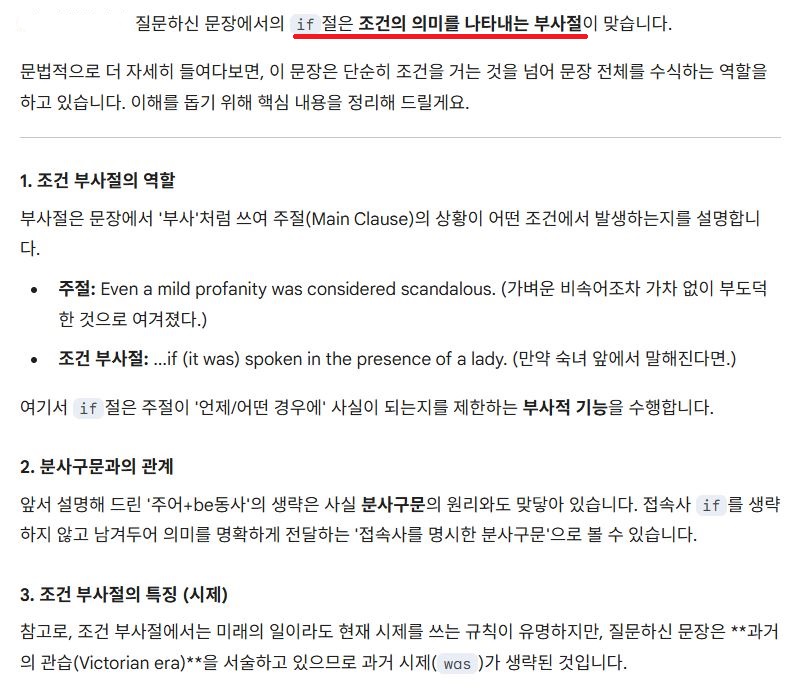
In the Victorian era,
even a mild ______ was considered scandalous
if spoken in the presence of a lady.
A) profanity
B) hex
C) anathema
D) damnation
Answer: A
Explanation:
Profanity refers to language
that is irreverent toward sacred things
or is socially offensive and low-bred.
20.
The villagers feared the "Evil Eye,"
believing that a single look from the stranger could act
as a ______ and ruin their harvest.
A) blasphemy
B) expletive
C) vulgarism
D) jinx
Answer: D
Explanation:
A jinx is
something or someone believed to bring bad luck or misfortune.
21.
During the intense trial,
the defendant's sudden ______ caused the judge
to warn him about using such offensive language in the courtroom.
A) cuss
B) obscenity
C) imprecation
D) spell
Answer: B
Explanation:
An obscenity refers to language or behavior
that is socially taboo, lewd, or extremely offensive.
22.
The archeologist was careful not to disturb the tomb,
fearing the ______ inscribed on the entrance
would bring death to anyone who entered.
A) vulgarism
B) malediction
C) expletive
D) profanity
Answer: B
Explanation:
A malediction is a formal utterance or magical wish intended
to bring about evil, harm, or destruction.
23.
In the middle of the crowded market,
the beggar shouted a loud ______ toward the sky,
calling for divine justice against the wealthy merchants.
A) imprecation
B) anathema
C) cuss
D) jinx
Answer: A
Explanation:
An imprecation is a spoken curse,
specifically one that calls upon a god or supernatural force
to strike someone.
24.
He was a rough man who would ______ at the slightest inconvenience,
much to the dismay of his polite neighbors.
A) anathema
B) execration
C) cuss
D) spell
Answer: C
Explanation:
Cuss is a colloquial and informal term
for using a swearword or expressing anger through "bad words."
25.
The politician's controversial views made him an ______ to many citizens,
who now refused to support any of his policies.
A) expletive
B) anathema
C) vulgarism
D) blasphemy
Answer: B
Explanation:
Anathema refers to someone or something
that is intensely disliked or formally rejected/cursed
by a community or religious group.
26.
After the ship was caught in a violent storm,
the sailors muttered words of ______,
fearing they were being punished for their past crimes.
A) damnation
B) hex
C) spell
D) profanity
Answer: A
Explanation:
Damnation is
the religious concept of being condemned to eternal punishment,
often used to express a sense of being doomed.
27.
The historian noted
that the king's letters were surprisingly full of ______ and crude remarks,
showing a side of him the public never saw.
A) maledictions
B) imprecations
C) vulgarisms
D) anathemas
Answer: C
Explanation:
A vulgarism is a word or expression
that is considered unrefined, low-class, or lacking in social polish.
28.
When the knight saw the dragon,
he couldn't help but let out a sharp ______ of surprise
before drawing his sword.
A) hex
B) jinx
C) blasphemy
D) expletive
Answer: D
Explanation:
An expletive is a word or exclamation used
to fill a sentence or express sudden,
strong emotions like surprise or anger.
29.
In some cultures,
a "witch doctor" might use a ______ to cause a rival to fall ill
or lose their wealth.
A) swearword
B) obscenity
C) curse
D) hex
Answer: D
Explanation:
A hex is a magical spell or a curse,
often associated with witchcraft,
used to bring about bad luck or injury.
30.
The heretic was burned at the stake for his public ______,
as he had openly mocked the church's most sacred symbols.
A) spell
B) jinx
C) blasphemy
D) malediction
Answer: C
Explanation:
Blasphemy is the act of speaking sacrilegiously or showing great disrespect
toward God or sacred things.
31.
His voice was filled with ______
as he spoke of the enemy general who had destroyed his hometown.
A) profanity
B) execration
C) cuss
D) vulgarism
Answer: B
Explanation:
Execration refers to a curse or a statement of intense loathing and hatred.
32.
While stubbing his toe,
he accidentally used a loud ______ in front of the children,
making him feel quite embarrassed.
A) anathema
B) imprecation
C) hex
D) swearword
Answer: D
Explanation:
A swearword is a common, s
ocially taboo word used to vent anger or frustration.
☞ [참고]
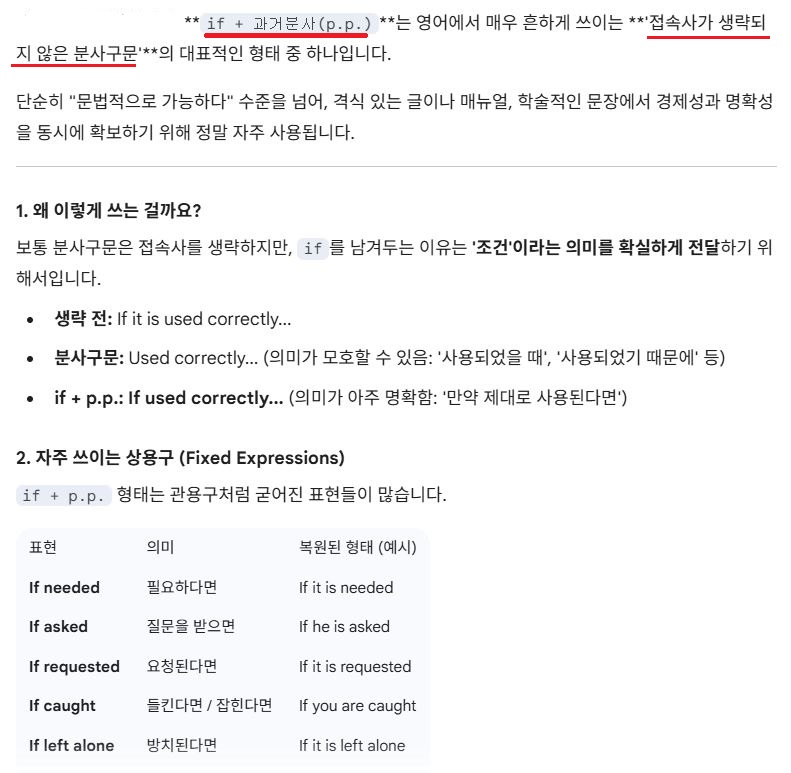
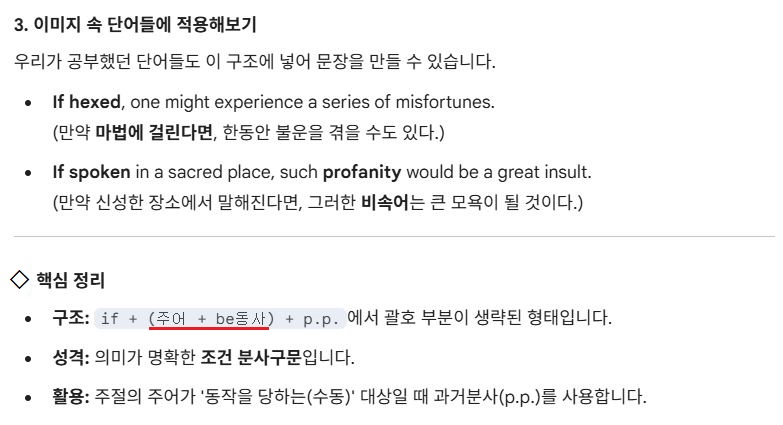
19번 질문 문장에서,
"if + 과거분사(p.p.)":


→

→
'영어 어휘력 기르기' 카테고리의 다른 글
| 어휘력 [wish - (28)] - Ⅰ → [단어/숙어 4] → [테스트 2] (0) | 2026.03.30 |
|---|---|
| 어휘력 [wish - (28)] - Ⅰ → [단어/숙어 4] → [테스트 1] (0) | 2026.03.30 |
| 어휘력 [wish - (28)] - Ⅰ → [단어/숙어 3] → [테스트 2] (0) | 2026.02.26 |
| 어휘력 [wish - (28)] - Ⅰ → [단어/숙어 3] → [테스트 1] (0) | 2026.02.26 |
| 어휘력 [wish - (28)] - Ⅰ → [단어/숙어 2] → [테스트 2] (0) | 2026.02.23 |